
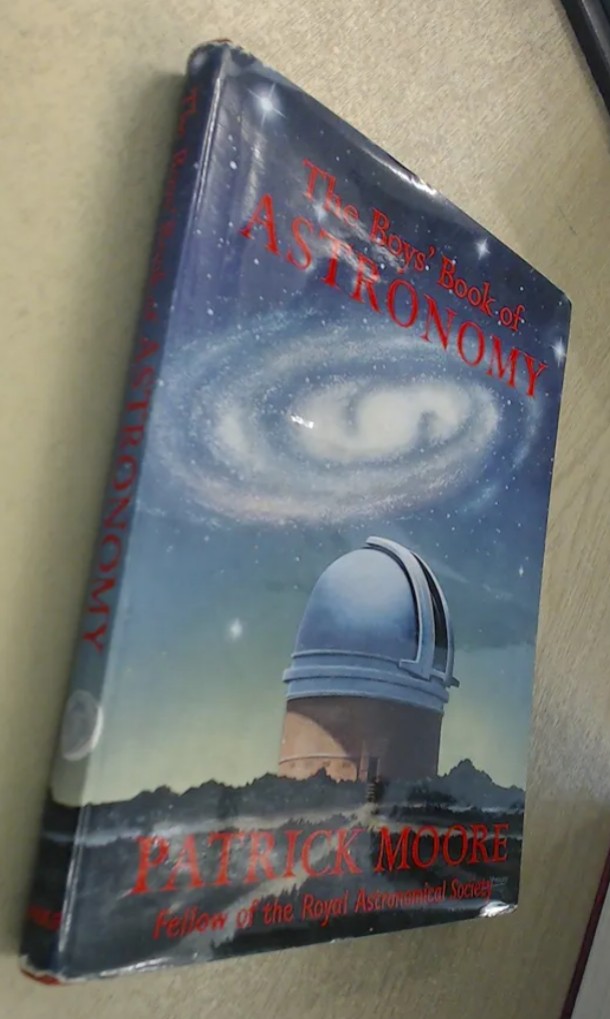
I became interested in matters Astronomical at about age 9, after receiving a book on Astronomy by Patrick Moore for Christmas. Totally fascinated by the contents, I started looking at the sky, finding the constellations and principal stars. An ancient pair of service binoculars, well past their junk-by date, gave me a view of the craters on the moon. I wanted a telescope, but the Bray finances didn’t run to that.
During my career at sea I often found myself on the bridge on the twelve-to-four watch, as Second Mate. My powerful ex-WW2 Navy binoculars gave me a much better view of the heavens, especially on long ocean passages. I never saw the Northern Lights, but I often observed Aurora Australis, the Southern Lights, while I was in Antarctica aboard the “John Biscoe”. I read everything I could lay my hands on, on the subject.
In 1976 I started work lecturing at a nautical college, training ships’ officers for their professional examinations. At about this time I attended a course, “Astronomy for Schools”, held at the Royal Observatory, Greenwich. It was a fabulous course, run by John Dix, John Wall and the tv astronomer Heather Couper. It included several nights observing on the superb 28″ refracting telescope at Greenwich. Having completed this course I instigated an evening GCSE course on Astronomy, and several of my students passed the exams. I was invited back to Greenwich the following year to lecture on the Astronomy for Schools course.
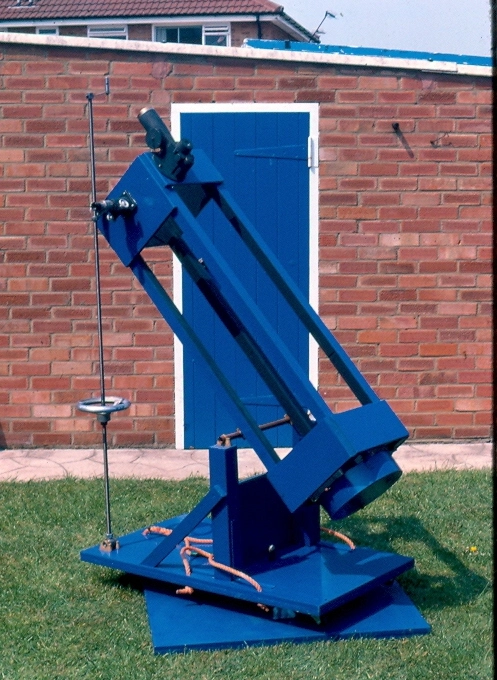
Back in Lowestoft I obtained a set of optics for a 10″ reflecting telescope . Using bits and pieces from my workshop junk-box, I built a quite impressive telescope. While building it I had no idea whether it would work, so you can understand my amazement when “first light” showed crystal-clear stars in the eyepiece. For a few years I became an enthusiastic “backyard astronomer”. But eventually my enthusiasm waned, and I sold the telescope. That was all about 35 years ago. Nowadays, being older, the joys of observing the heavens are somewhat dulled by the need to be messing about in the cold at nights.
But, a new era has begun in the Bray Astronomy adventure! I bought a Smart telescope. Having read the reviews and literature extensively, I took a deep breath and purchased a Seestar S50.
It looks like a bit of a kiddies’ toy, but it is far from that. It is an extremely powerful bit of kit. It consists of a 50mm refracting telescope with an apochromatic triplet lens. There is no eyepiece; you dont “look through” it. The whole unit is controlled by app on your mobile phone. There is GPS and compass on board, so no need for the lengthy set-up and calibration procedure involved with a conventional telescope. You just take it out with it’s tripod, plonk it down and it calibrates itself.
The app contains a full map of the heavens, in real-time. Although the telescope is quite diminutive, the optics are top quality. Instead of an eyepiece, a Sony camera is located at the focal point, and the image is projected to the phone screen.
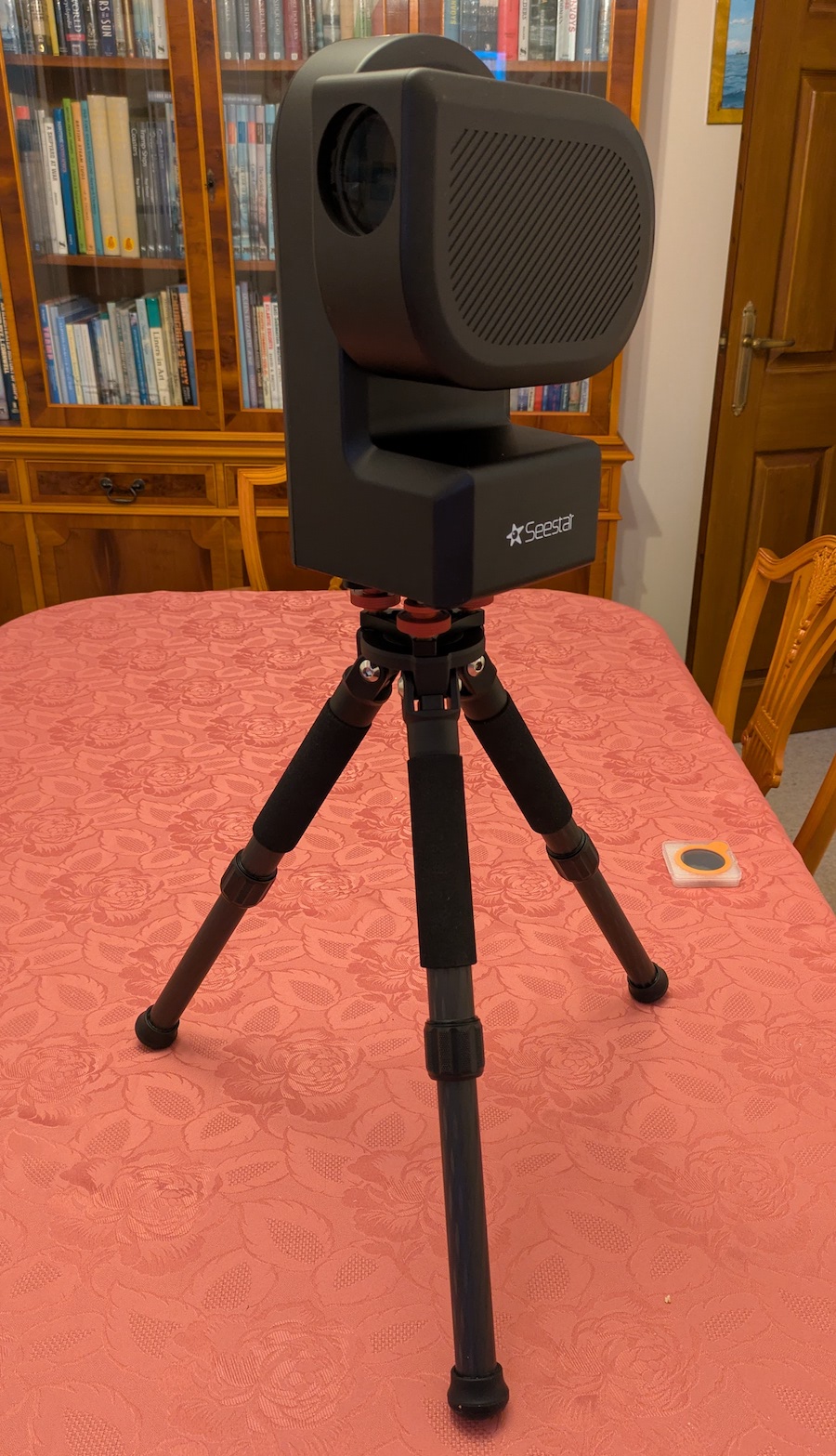
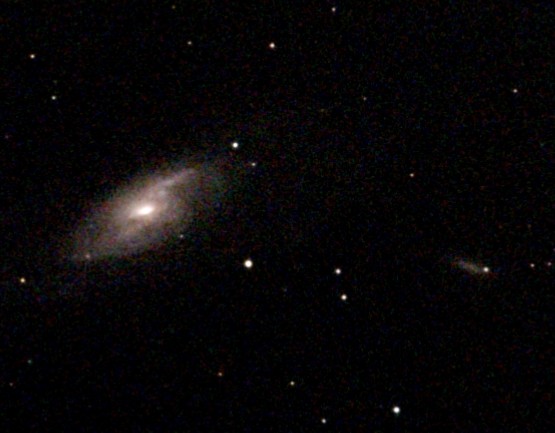
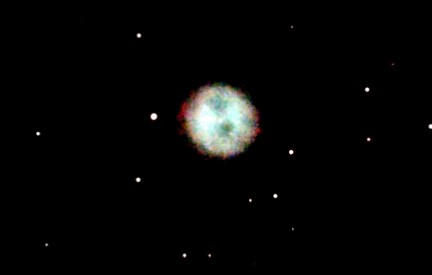
The clever bit is that the image builds over time. A series of 10-second exposures are overlaid, or “stacked” providing an image. A list of visible objects is provided for the date, time and location. It is simply a case of selecting one, tap the “GoTo” icon, and like magic the telescope trains and elevates onto the object, focusses, and commences exposures and stacking while tracking the object. A great feature is that having positioned the telescope, you can operate it from your armchair in the warm.
There is much, much more to this instrument that I have mentioned here. If you’re interested, Google “Seestar”.
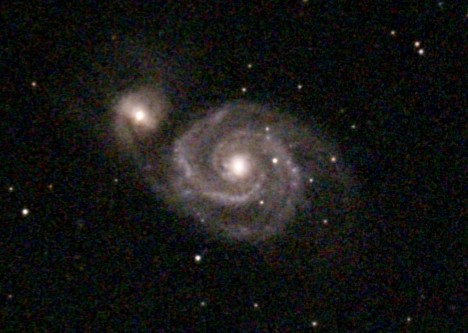
Of course, no optical telescope is of any use whatsoever in overcast conditions. From the day the unit arrived we had three weeks of solid overcast with frequent rain! How frustrating. But I’m finally getting some amazing results. Early days, but I have some brilliant images of various deep-sky objects including the Whirlpool galaxy. The latter involved an hour’s worth of stacking 10-second exposures; 360 of them, providing a much better image than that which would be seen through the eyepiece. On my old 10″ reflecting telescope, despite its larger aperture, the Whirlpool would just have been a faint smudge.
A long way to go but watch this space.